
Across Amazon 1-star reviews and angler forums like r/flytying and r/Fishing_Gear, the single most damaging failure in generic bulk fishing hooks is sudden brittle snap: a brand-new hook breaks cleanly in half when clamped in a fly-tying vise, when crimping a barb, or on the first headshake of a heavy fish. In high-carbon steel hooks (72A, 82B, AISI 1080), this catastrophic fracture is rarely caused by weak wire—it is almost always caused by unrelieved hydrogen embrittlement after electroplating or over-hardening beyond 62 HRC.
Atomic hydrogen diffuses into high-carbon steel during acid pickling and electroplating (Black Nickel, Tin, Zinc). Under ASTM B850 and ISO 9588, hooks must enter the 190-220°C baking oven within 1 hour of plating—and strictly BEFORE any chromate passivation or sealer coat traps the hydrogen inside the grain boundaries.
Section 01Why High-Carbon Fishing Hooks Are Uniquely Vulnerable (55-62 HRC)
Premium fishing hooks start as cold-drawn high-carbon or vanadium-microalloyed steel wire (1,500-1,900+ MPa raw tensile strength) and are quenched and tempered to a finished hardness of 55 to 62 HRC. Below 55 HRC, hooks straighten out under drag; above 62 HRC, ductility collapses. Because susceptibility to hydrogen embrittlement spikes sharply above 31 HRC (1,000 MPa), every plated high-carbon fishing hook sits deep inside the high-risk metallurgy zone.
| Wire Grade | Nominal Carbon | Ref. Standard | Finished Hook Role |
|---|---|---|---|
| 72A High-Carbon | ~0.72% C | EN 10270-1 / JIS G3506 | High-ductility cold-forming baseline for general freshwater & octopus hooks |
| 82B High-Carbon | ~0.82% C (Mn-controlled) | EN 10270-1 / JIS G3506 | Higher post-temper stiffness for saltwater, treble & heavy jig hooks |
| AISI / SAE 1080 | 0.75% - 0.88% C | AISI / SAE | Rigid, unyielding shanks for offshore big-game & 3X-4X strong hooks |
| Vanadium Micro-Alloy | High-C + trace V | Specialty Alloy Wire | Refines grain boundaries so thinner wire resists bend-out & shock snap |
ASTM B850 Minimum Hydrogen Relief Baking Duration by Steel Strength
Higher tensile strength and hardness trap atomic hydrogen more aggressively during acid pickling and electroplating, requiring longer thermal baking at 190-220°C.
Section 02ASTM B117 Neutral Salt Spray: Coating Tiers & Point/Eye Failure Criteria
Buyers frequently ask for ASTM B117 certified hooks, but an important engineering distinction applies: ASTM B117 (5% NaCl neutral fog at 35°C) specifies how to operate the test chamber—it does not set pass/fail hours. Instead, OEM brands specify target hours by coating tier and judge failure specifically at the hook point (penetration loss) and hook eye (knot abrasion).
| Coating System | Typical ASTM B117 Range | Primary Strength | Best-Fit Market Tier |
|---|---|---|---|
| Black Oxide | 24 - 72 hours | Low-glare matte finish, economical | Freshwater economy & dry-fly value lines |
| Bright Tin / Standard Zinc | 96 - 240 hours | Reliable saltwater protection, clean weld coverage | Mid-tier saltwater trebles, circle hooks & OEM lure packs |
| Multi-Layer Black Nickel / Tin-Alloy | 240 - 480+ hours | Stealth dark finish with upgraded corrosion barrier | Inshore brackish lures & mid-high bass/predator lines |
| Marine PTFE / Nano Composite over Plate | 500 - 720+ hours | Lowest piercing friction + extended marine corrosion life | Flagship offshore saltwater & tournament retail brands |
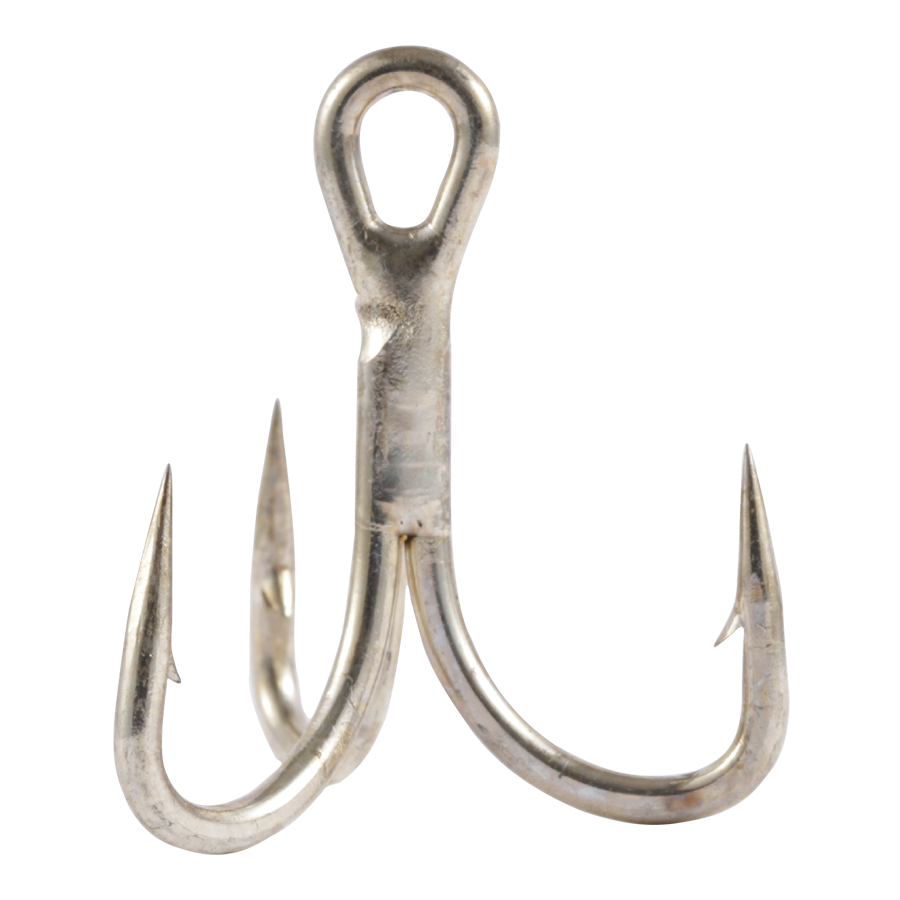
ST66 4X Strong Forged Saltwater Treble
4X strong high-carbon treble built with controlled tempering and marine Tin/anti-rust finishing for offshore plugs and jigs.
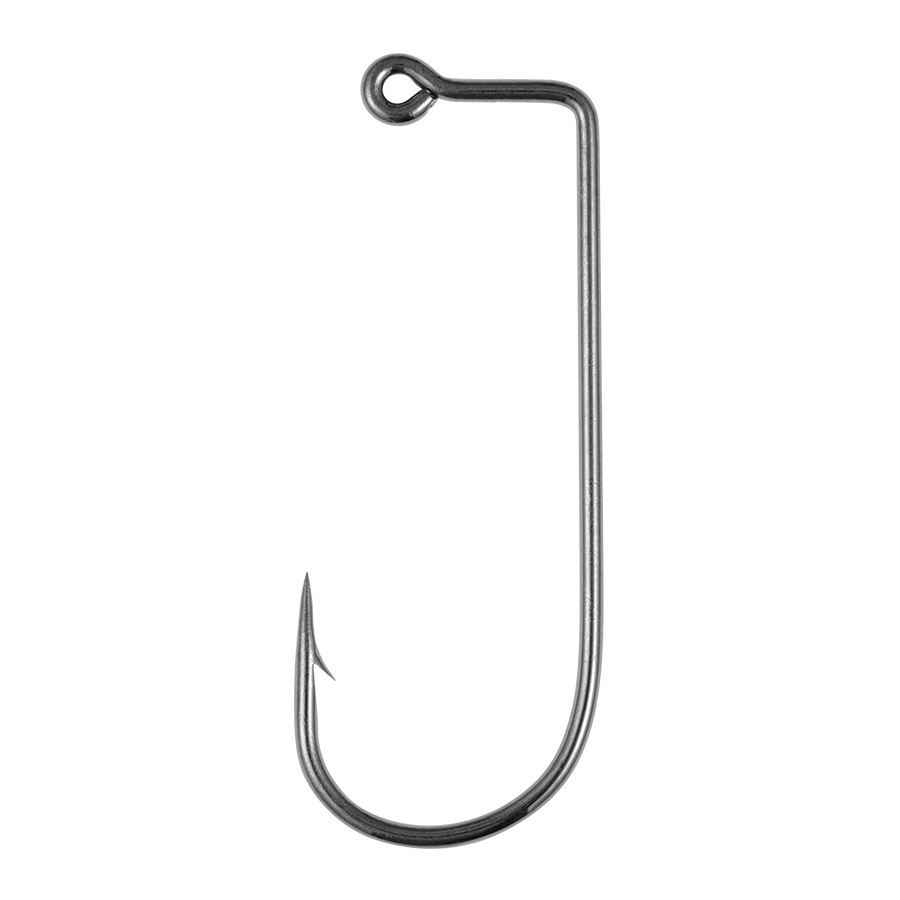
L51501 Precision 90° Jig Head Hook
Chemically sharpened high-carbon jig hook engineered to flex before snapping under heavy structure loads.
Section 034-Step Factory QC Protocol to Eliminate Brittle Snap & Early Rust
Buyer Q&AFrequently Asked Questions for OEM & Wholesale Buyers
Why do cheap plated fishing hooks snap cleanly instead of bending?
Most brittle snaps in electroplated high-carbon hooks come from hydrogen embrittlement—atomic hydrogen absorbed during acid pickling and electroplating that was never baked out at 190-220°C per ASTM B850 / ISO 9588—or from over-hardening past 62 HRC.
Does ASTM B117 define a universal passing hour count for saltwater fishing hooks?
No. ASTM B117 standardizes the 5% NaCl, 35°C neutral salt-spray chamber procedure only. Target hours (such as 96-240h for Bright Tin or 500-720+h for high-end marine composite coatings) are defined by the OEM buyer specification.
Should a high-carbon hook bend or snap at extreme overload?
Premium engineering (used by leading brands like Ahrex and KONA) targets controlled bend/yield before catastrophic snap, giving the angler a chance to land the fish rather than suffering instant hook fracture.
How does chemical sharpening affect hook hardness?
Unlike aggressive dry grinding—which can generate friction heat that anneals and softens the 55-62 HRC tip—controlled acid/electrochemical sharpening removes micro-burrs at low temperature without degrading steel hardness.
Can KONA provide stock samples for our own salt-spray and UTM pull tests?
Yes. KONA supplies free open-stock samples (freight collect) from our Gao'an, Jiangxi factory so your QC lab can independently verify hardness, bend curve, and corrosion resistance.
Technical Standards & Peer-Reviewed References
- ASTM B850-98 (Reapproved): Standard Guide for Post-Coating Treatments of Steel for Reducing the Risk of Hydrogen Embrittlement (190-220°C baking guidelines).
- ISO 9588: Metallic and other inorganic coatings — Post-coating treatments of iron or steel to reduce the risk of hydrogen embrittlement.
- ASTM B117: Standard Practice for Operating Salt Spray (Fog) Apparatus (5% NaCl, 35°C neutral salt fog protocol).
- EN 10270-1 / JIS G3506: High-Carbon Steel Wire Rod Specifications (72A / 82B / 1080 cold-drawn spring and hook wire metallurgy).
Sourcing OEM Fishing Hooks for Your Brand?
Direct Nanchang factory (200+ specialists, in-house heat treatment & plating). Free stock samples & custom tooling quotes in 24h.