
Every premium fishing hook brand markets a trademarked point name—yet underneath the branding, all fishing hook points in the world are produced by combinations of three fundamental metalworking processes: mechanical grinding, cold-forged facet pressing, and controlled chemical acid-etch sharpening.
Understanding how these processes interact with steel microstructure—and why purely over-etched needle tips roll over on rocky reefs while purely ground cones require excessive hookset force—allows OEM buyers to specify the exact point architecture their target fishery demands.
Section 011. Mechanical Grinding vs. Chemical Acid-Etching Physics
High-speed mechanical grinding stones remove metal quickly to establish the primary taper, but friction heat can soften the microscopic tip (temper loss) and leave microscopic circumferential grind grooves that increase piercing drag. Controlled chemical sharpening immerses the pre-ground tip into an engineered acid bath that dissolves high spots isotropically—polishing away grind marks and sculpting an ultra-smooth, razor-fine concentric cone with zero thermal softening.
| Sharpening Process | Micro-Surface & Geometry | Penetration Force | Tip Durability on Rock/Bone |
|---|---|---|---|
| Pure Mechanical Grind | Micro-grooves; blunt tip radius | Moderate–High | High durability; easy to re-stone |
| Hybrid Grind + Chemical Etch | Mirror-smooth concentric needle | Ultra-Low (-35% force) | Balanced (gold standard for 90% of hooks) |
| Forged Cutting / Knife Edge | 3-sided razor facets + etch | Very Low through hard bone | High structural ridge against tip roll |
| Over-Etched "Needle" (Defect) | Paper-thin fragile whisker tip | Ultra-Low on first cast | Curls/rolls instantly on first rock tap |
Relative Piercing Force Required to Penetrate Dense Jaw Cartilage (Lower = Better)
Comparison of force needed at initial contact across four manufacturing point profiles
Section 022. Why Tip Geometry Must Match Coating Thickness
Chemical sharpening achieves tip radii measured in single-digit microns. If a factory then dumps those precision-etched hooks into a sloppy thick lacquer dip or uncalibrated electroplating bath, coating buildup balloons over the microscopic tip—wiping out the chemical sharpening investment completely. Running chemical etching and electroplating in-house lets KONA calibrate plating bath current density so coatings taper thinly to the point without blunting it.
Pure acid etching without controlled tip-radius geometry creates fragile 'hair-thin' tips that curl after tapping a single oyster shell. KONA combines precision mechanical pre-grinding with timed chemical bath etching so the point stays razor-sharp AND survives hard bony reef jaws.
| Target Fishery | Optimal Point Architecture | Why It Outperforms | KONA Recommended Finish |
|---|---|---|---|
| Finesse Bass / Dry Fly / Area Trout | Long Hybrid Chemically Etched Needle | Instant hookset on light rod sweep | Matte Low-Friction Stealth / BN |
| Heavy Reef Snapper / Grouper | Forged Extra-Long Beak + Chemical Etch | Resists tip roll on molar plates | Saltwater Tin / Black Nickel |
| Offshore Pelagic Trebles (GT / Tuna) | 3-Facet Cutting / Forged Needle Point | Slices dense bone under 40 lb drag | Saltwater Tin (96h+ B117) |
| Commercial Stainless Longline | Mechanically Ground Heavy Cutting Point | Re-sharpenable over multi-month trips | Bare Passivated AISI 316 SS |
Section 033. KONA Chemically Sharpened Reference Models
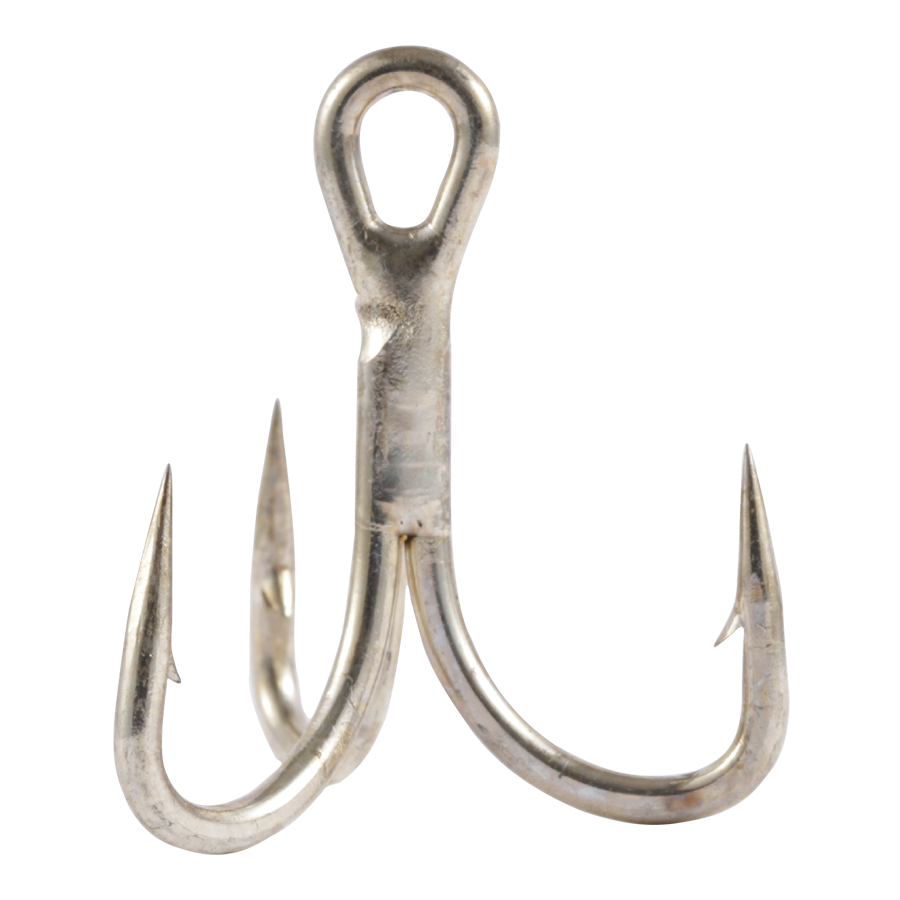
ST66 4X Strong Treble Hook
4X heavy forged high-carbon saltwater treble with uniform Tin/anti-rust weld coverage for poppers and jigs.
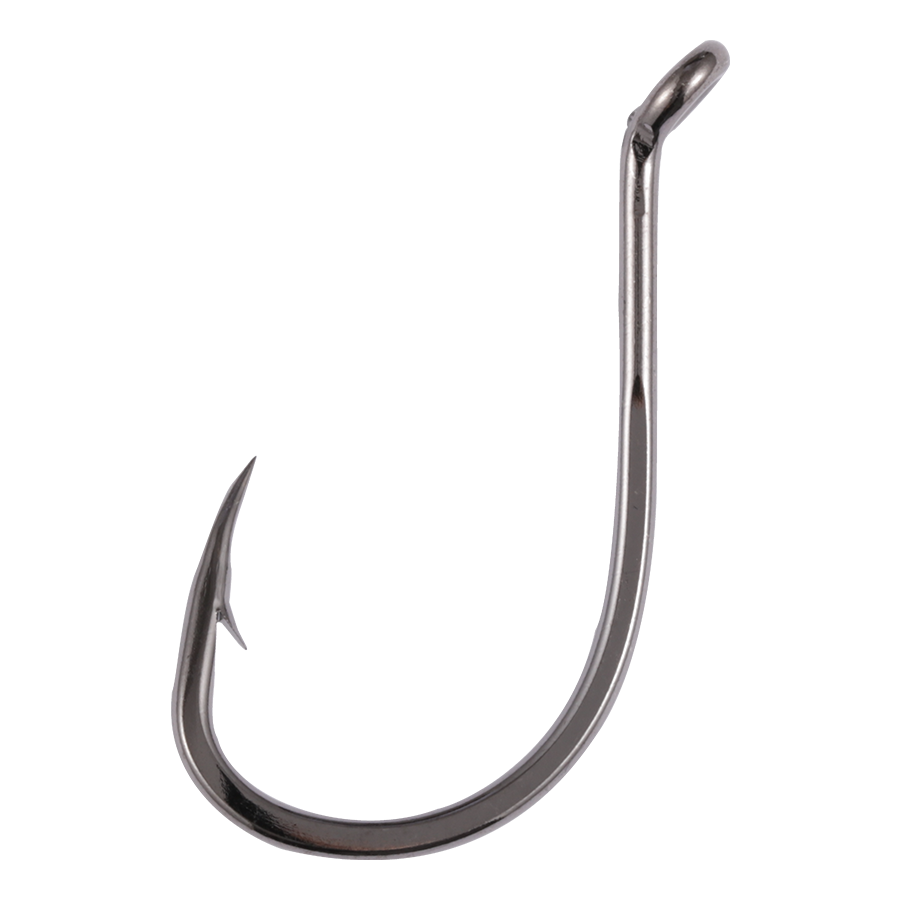
H11302 Beak Hook (Extra Long Point)
Forged saltwater beak/octopus hook with extended chemically sharpened point for reef and pelagic species.
Section 044. B2B Incoming QC Inspection SOP for Point Sharpness
Buyer Q&AFrequently Asked Questions for OEM & Wholesale Buyers
How does chemical sharpening actually work inside a hook factory?
After mechanical pre-grinding forms the rough point taper, hook tips are immersed in a precisely timed, temperature-controlled chemical etching bath that removes microscopic burrs and sculpts a smooth, concentric needle cone without frictional heat.
Why do some ultra-sharp hooks bend at the very tip after one snag?
Over-etching thins the final millimeter of steel into a fragile whisker. KONA calibrates etch dwell time to preserve an arched structural core behind the razor tip.
Are all KONA high-carbon hooks chemically sharpened?
Yes. All KONA premium freshwater, saltwater, treble, jig, and fly lines undergo controlled chemical sharpening prior to in-house tempering and plating.
Can a chemically sharpened hook be re-sharpened with a pocket file?
We advise replacing dulled coated hooks rather than filing them, because filing strips the corrosion-resistant plating right at the tip.
Technical Standards & Peer-Reviewed References
- ASM International. ASM Handbook, Volume 5: Surface Engineering — Chemical Milling & Acid-Etch Polishing of Carbon Steels.
- KONA Hook Engineering Lab. Digital Membrane Penetration-Force & 20× Optical Tip-Radius QC Protocol.
Sourcing OEM Fishing Hooks for Your Brand?
Direct Nanchang factory (200+ specialists, in-house heat treatment & plating). Free stock samples & custom tooling quotes in 24h.